The EU AI Act is not a standalone compliance issue. For many organizations, it sits atop existing obligations under GDPR, cybersecurity laws, consumer protection rules, sector-specific requirements, and contractual commitments. That means a single AI-related failure can trigger multiple violations, multiple investigations, and potentially much higher financial, legal, and reputational consequences.
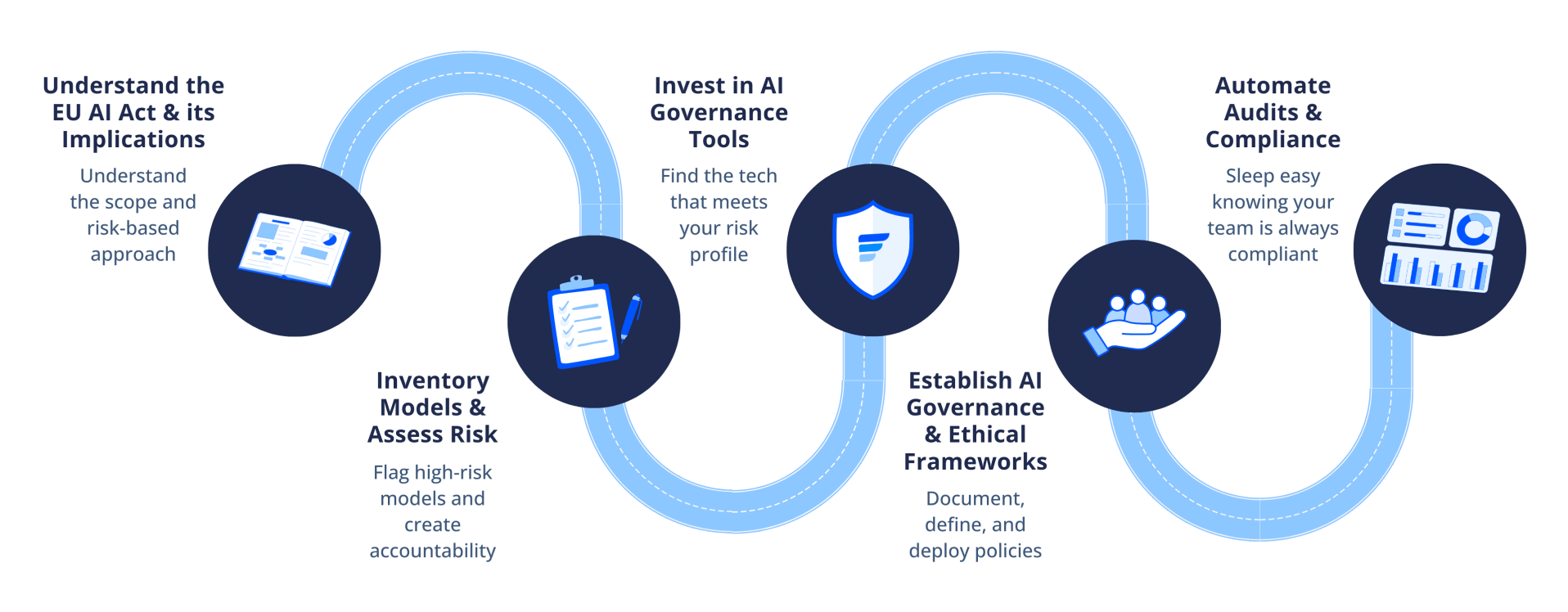
The EU AI Act introduces a risk-based framework for artificial intelligence systems. It places stricter obligations on providers, deployers, importers, and distributors of AI systems, especially when those systems are classified as high-risk or involve prohibited practices. Companies using AI in hiring, critical infrastructure, education, healthcare, law enforcement, or access to essential services may face particularly high scrutiny.
The real challenge is that AI compliance does not stop with the AI Act. If an AI system processes personal data, influences customer decisions, creates security risks, or produces discriminatory outcomes, regulators may also look at GDPR, NIS2, consumer protection law, employment law, product liability, and industry-specific rules.
EU AI Act
The strongest overlap is with GDPR. Many AI systems rely on personal data for training, testing, profiling, monitoring, or automated decision-making. If that data is collected improperly, used beyond its original purpose, retained too long, or processed without a lawful basis, an organization may face GDPR exposure in addition to AI Act violations.
When AI models use personal data for automated decision-making that affects individuals without their knowledge or awareness.
Automated decision-making and profiling of data subject owner information
When organizations collect more data than necessary to train or operate AI tools, or inappropriately or accidentally spread personal data outside the control of the collecting organization.
When AI outputs affect individuals using biased data
AI systems handling sensitive or regulated data
Including access, correction, objection, and deletion requests
Partner with Arrakis Consulting to fortify your cybersecurity defenses, protect your business from evolving threats, reduce risk, increase privacy, and resilience in today's digital world.
A company deploys an AI recruiting platform to rank candidates. The model disproportionately filters out older applicants or candidates from certain backgrounds. That may trigger concerns under the EU AI Act regarding high-risk AI, GDPR issues related to profiling and transparency, and employment discrimination claims.
An AI chatbot is trained on customer emails, support tickets, and account records without proper notice or lawful basis. The company may face GDPR violations for unlawful processing, insufficient transparency, and excessive data use, and may also draw scrutiny under the AI Act for governance failures.
A business relies on AI-driven monitoring to detect threats, but poor oversight and weak validation allow a breach to go undetected. Regulators may examine AI governance, cybersecurity controls, incident response, and reporting obligations under laws such as NIS2.
A financial or insurance provider uses AI to score applicants, but cannot explain why certain people were denied. That creates risk under the EU AI Act, GDPR automated decision-making provisions, consumer protection standards, and sector-specific financial regulations.
A marketing team uses generative AI to create product claims, legal summaries, or policy language without review. If the content is inaccurate, deceptive, or discriminatory, the organization may face consumer protection exposure, contractual liability, reputational damage, and AI governance failures.
Is the system prohibited, high-risk, or subject to transparency obligations?
Are there lawful bases, proper notice, and support for data subject rights?
Are cybersecurity controls, monitoring, and incident reporting in place?
Could the AI create bias or unfair treatment in workforce decisions?
Could outputs mislead, manipulate, or unfairly influence customers?
Are governance, risk, controls, and accountability documented and operational?
Partner with Arrakis Consulting to fortify your cybersecurity defenses, protect your business from evolving threats, reduce risk, increase privacy, and resilience in today's digital world.
Organizations should not treat AI compliance as a narrow legal exercise. It requires coordination across privacy, security, compliance, HR, legal, operations, and executive leadership.
Recommended next steps:
1. Inventory all AI systems in use, including third-party tools. Watch our video on Shadow AI.
2. Classify use cases by risk, purpose, and regulatory exposure
3. Map data flows, especially where personal or sensitive data is involved
4. Review transparency, oversight, testing, and human review controls
5. Align AI governance with GDPR, cybersecurity, and sector-specific obligations
6. Build documentation that can withstand regulator, auditor, and customer scrutiny
Arrakis Consulting helps organizations turn complex regulatory overlap into a practical compliance strategy. From AI governance and ISO 42001 readiness to GDPR alignment, cybersecurity controls, risk assessments, and policy development, Arrakis brings experienced, executive-level guidance grounded in real-world implementation.
If your organization is using AI in regulated environments, now is the time to assess where hidden risk may exist. Reach out to Arrakis Consulting for help building a defensible, operational approach that reduces exposure, strengthens governance, and supports long-term business growth.
Shadow AI Risks
At Arrakis Consulting, we understand that AI adoption intersects with critical cybersecurity and compliance requirements. As a Service-Disabled Veteran-Owned Small Business (SDVOSB) with deep expertise in CMMC, ISO 27001, GDPR, the EU AI Act, and comprehensive cybersecurity services, we help organizations implement AI solutions while maintaining the security posture and regulatory compliance that modern business demands.